LED Headlights
Rolando André López · Puerto Rico
At 6:15 a.m., on September 20, 2017, Hurricane María made landfall in Yabucoa, a town on the southeast of Puerto Rico. From there, the storm ripped through the entire island, tearing a gash across our mountains and cities as it exited northwest. Our electrical grid lay shattered. It’s been nine years since, and blackouts remain a constant, our city streets the darkest I’ve ever driven. My friend, I’m talking about miles and miles of road without a single working light post, many of them still down since that morning when María’s winds blew them out.
Often the only lights shining are on the cars around me—LED headlights, aftermarket accessories which cast wide nets of blindingly white light. So imagine yourself driving on a pitch-black road, 5 to 10 cars behind you, each projecting such power that your own rearview mirrors become mere reflectors of their violent lights, their whiteness so total and sharp that it cuts at you and you are forced to squint through the hyperglare, though even when you do, they still penetrate your slitted sight, those glowing beams, little suns moving right behind you.
Remember that plague of blindness from Saramago’s fable? How its victims describe it as a thick white mist, a sea of milk that takes over their entire ocular sense, until they scream, I can’t see…
Family and friends tell me, I avoid driving after dark…
But on the road at 3 or 4 a.m., after witnessing radical performance art at El Paseo de Diego in Río Piedras, I’ll drive down a solitary Highway #1, then change over to #52 after passing El Hospital de Veteranos. On that stretch I’ll keep going, way past my exit, until the mountains start to come up and there are no other cars. Then I’ll play a song for the moment—tonight, the track is Turista’s “Naturaleza Humana,” just for you—as I discern the difference between the darkness of a mountain’s outline, and that of the night that surrounds it. A consolation, small enough for an island that now lacks water, too, for the same reason it lacks so many essential needs: the decay of colonial progress, the gangster-level corruption in the corridors of power that goes unchecked for generations. Neglect accumulates. And nine years pass, heavy as a hundred. Did you read the most recent one, about prisoners being intimidated to vote (they have that right in PR) for a certain favored gubernatorial candidate, under threat of torture or worse? Once the investigative team gathered enough evidence to press charges, the U.S. Attorney’s Office stopped them from proceeding.
Turn a blind eye, they say. But on the road, just to make it home, through violent light and naked dark, we keep our eyes open.
Often the only lights shining are on the cars around me—LED headlights, aftermarket accessories which cast wide nets of blindingly white light.
I catch myself thinking, Hasn’t it always been like this?
Our roads always dark?
And I insist: No. Not like this.
Still, amiga mía, just to be sure, my eyes will look up at memory, and search for those brighter nights, now long gone.
Rolando André López
San Juan, Puerto Rico,
July 2026.
About the author
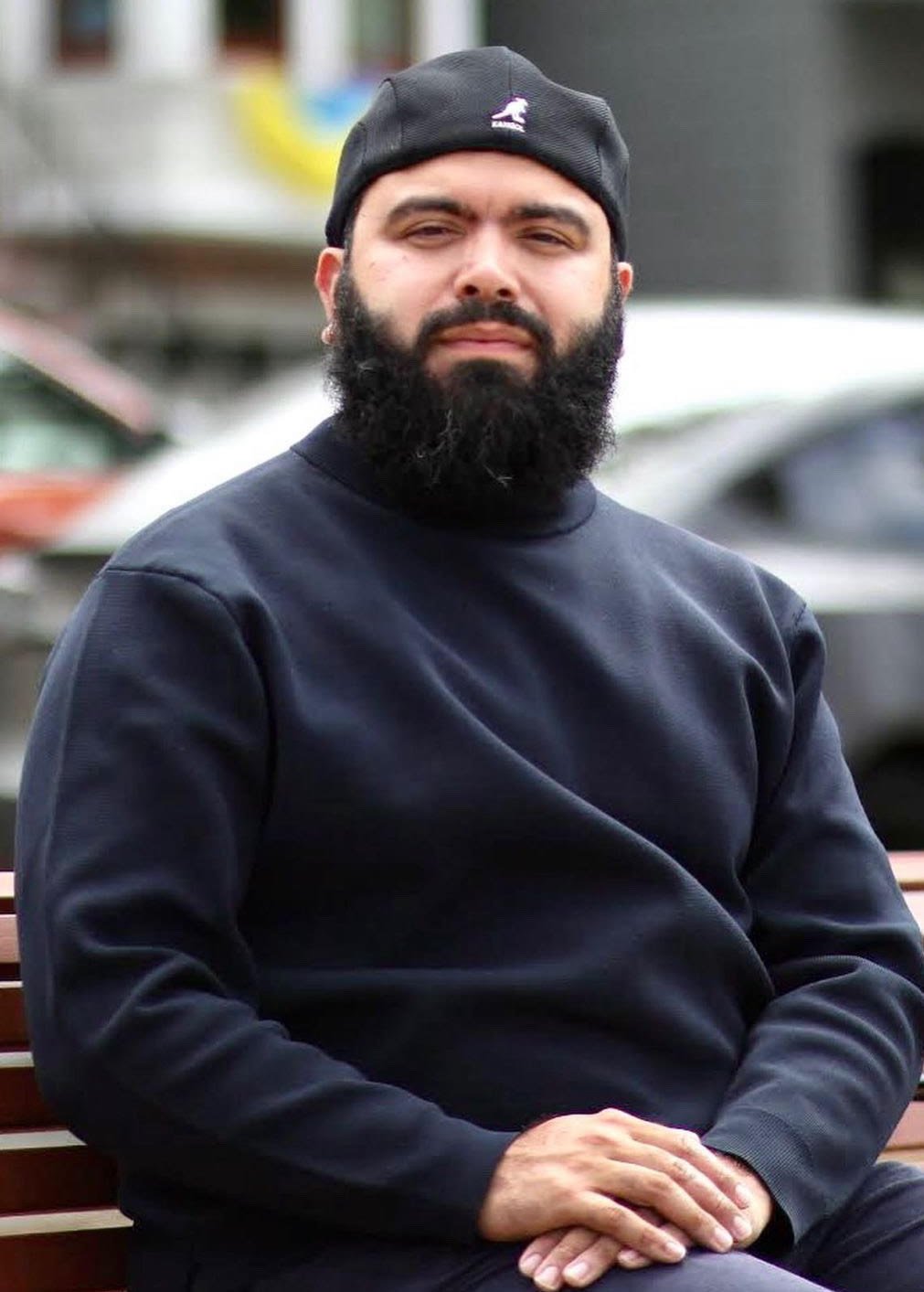
Rolando André López lives in San Juan, Puerto Rico. His work has appeared in Passages North, Off Assignment, Konch Magazine, Acentos Review, and others. Recently, he was featured in the anthology Not Your Papi's Utopia: Latinx Visions of Radical Hope, published by Mouthfeel Press in 2024. He has been cited twice by Best American Essays. He was a 2023 Puerto Rican Artist Fellow for MASSMOCA’s Assets4Artists program. He holds an MFA in Creative Writing from California College of the Arts.