Nothing on the Sardine Run
Pier Nirandara · South Africa
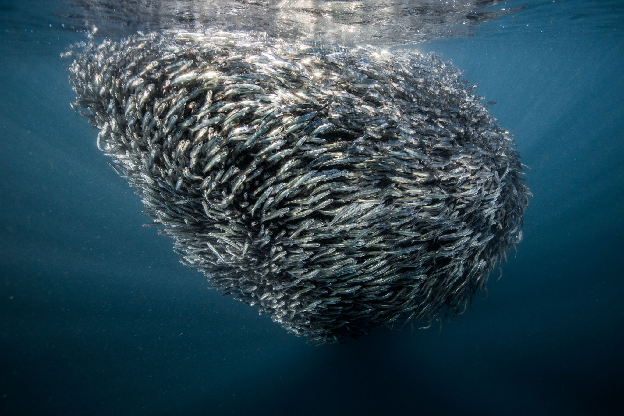
Every year between May and July, millions of sardines leave the cold waters of the Agulhas Bank and move northward along South Africa's Wild Coast. The natural phenomenon is known as the sardine run—the largest migration in terms of biomass on earth, triggering a feeding frenzy of epic proportions: whales, sharks, dolphins, and birds, all hunting massive baitballs in explosive chaos. Scientists call it the Blue Serengeti, the greatest shoal on earth.
Pier Nirandara
This migration was once thought to occur due to “natal homing,” a behavior where animals return to their birthplace to breed, using geomagnetic imprinting and smell cues. We see it perhaps most famously in salmon—a journey home.
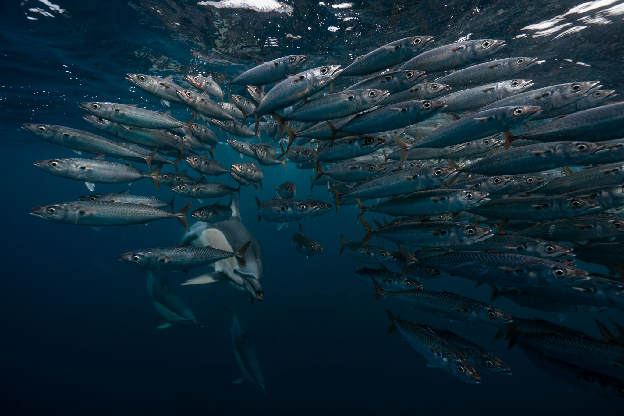
My first “run” was eight years ago, although in some ways, it feels like a lifetime. I was twenty-four, plunged into the literal deep end, surrounded by dusky sharks plowing through shimmering baitballs and Cape gannets raining down from the sky. An overwhelming spectacle so vast it makes you feel both small and infinite. When the frenzy was over, I recall floating in the deep blue galaxy glittering with fish scales. An ocean of stars.
Pier Nirandara
The experience catapulted me into a solo journey across southern Africa, and ultimately a move to Cape Town—close to the bottom of the earth. I’ve often thought about how the sardine run set me on a path chasing migrating animals around the world as an underwater photographer and expedition leader. How I, too, have become migratory. How my life has become its own strange existence on the run.
Yet, the sardine run is changing. Warming oceans, overfishing, shifting currents. Some years, we make the long, pot-holed journey to the Wild Coast, battle on our cold wetsuits at dawn, and launch the boats into the ferocious sea spray—only to be met with nothing.
What scientists have since discovered is that the run may not be natal homing at all, but a mistake. An ecological trap—a relic of behavior encoded during the last ice age that no longer serves the fish. Upwellings and retroflection along the Wild Coast create conditions that feel like home to the Atlantic-dwelling sardines. The fish begin near the Western Cape, migrating northwest up the coast towards Namibia. But a few follow this cold finger northeast, pinned between the continental shelf and the warm Agulhas Current, running headlong and suicidal into the jaws of predators. A pyrrhic victory of sorts.
The fish are searching for something that no longer exists as it once did, following the ghost of something that used to mean home.
I can’t help but feel a resonance. The fish are searching for something that no longer exists as it once did, following the ghost of something that used to mean home. A mistranslation between their evolutionary memory and a changed ocean.
An annual return to the Wild Coast is one of the few fixed points in my peripatetic life—a place unchanged in its wildness yet serving as a marker for all the ways I have changed and grown. I found a sense of belonging here, amongst the shoals and baitballs, in the ever-shifting tides. For a long time, in a place imbued with myth and magic, returning meant following my own ghost of home.
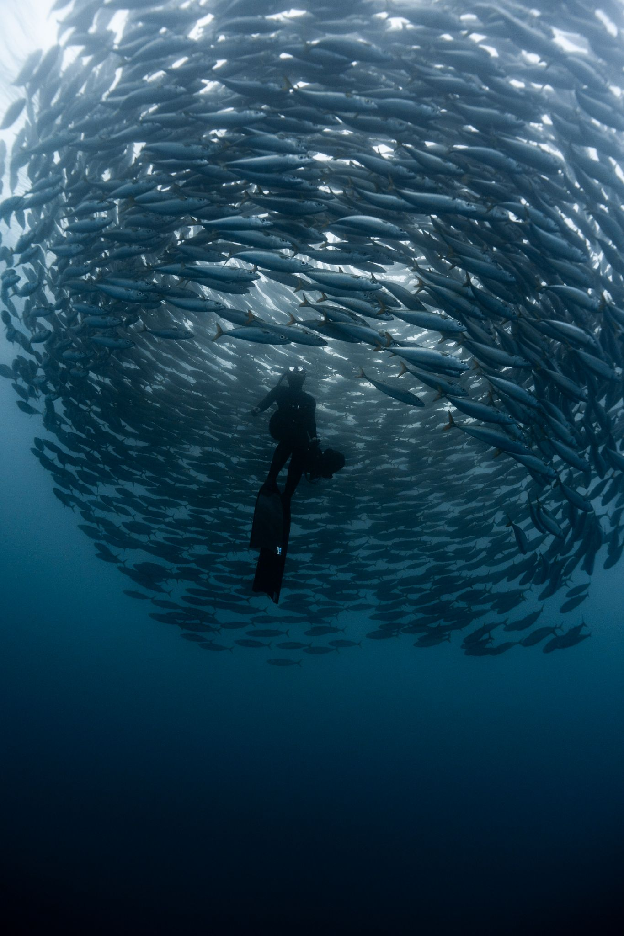
Perhaps I felt the most comfortable in motion, chasing something just beyond reach, yearning to go back to wild days on the open road, where my heart was unbroken, my self still unformed. But I wondered if a part of me was getting tired of pursuing the fleeting sensation of home in far-flung corners of the world. Perhaps it was time to stop running. To fight against the current, break out of the baitball, and embrace the greatest discomfort of all—of learning how to stay. To realize that home can be found not only in a place, nor a person, but rather an internal state. That home was within myself, and it was right here all along.
Pier Nirandara
About the author
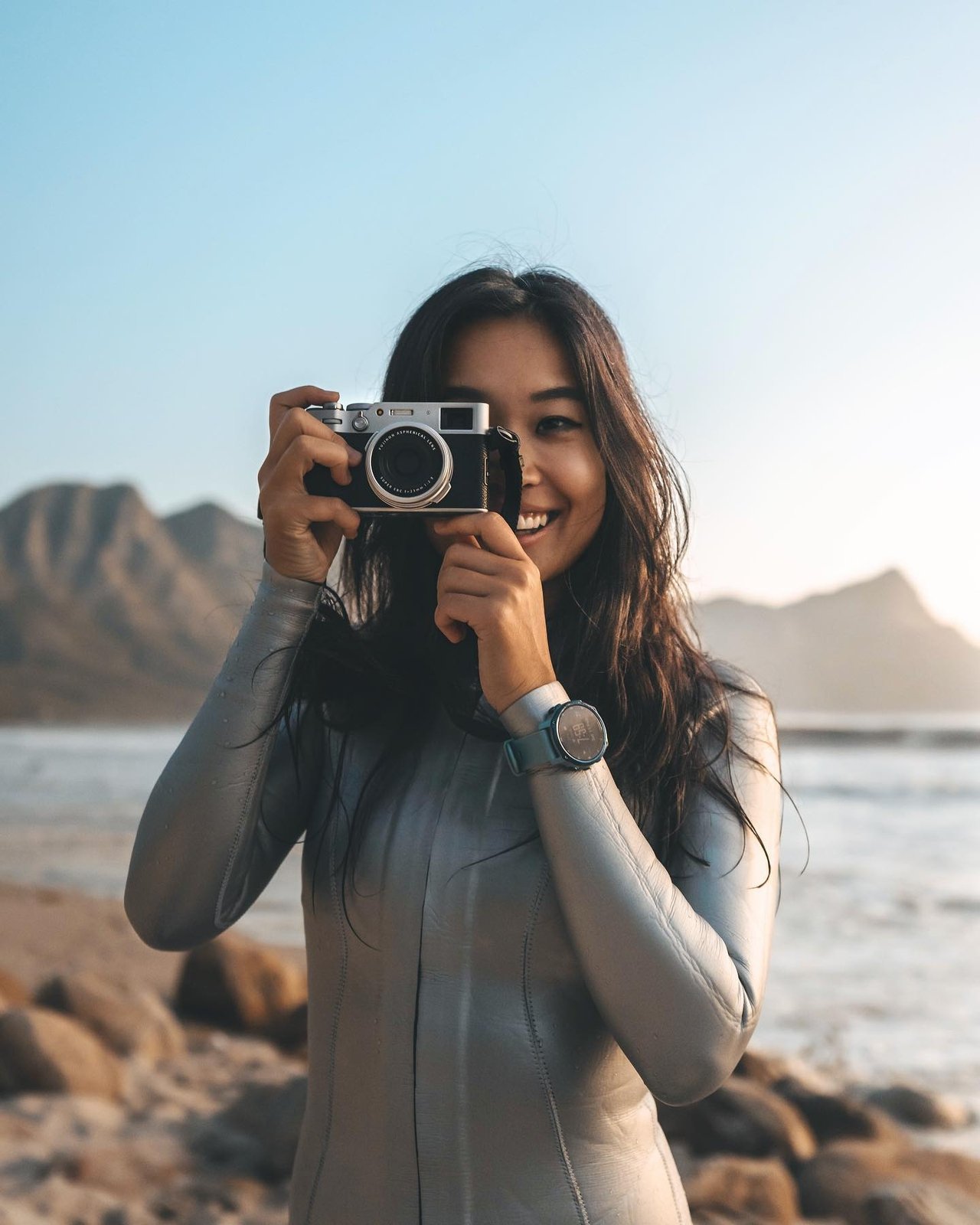
Pier Nirandara is an award-winning author, travel writer, film producer, and underwater photographer. She began her career as Thailand’s youngest English-writing author, publishing three #1 national bestselling novels, graphic novels, and short stories with over 200,000 copies sold. She later went on to represent literary clients at ICM Partners, serve as Director of Development at Sony Pictures, and as VP of Film & TV at A-Major Media—Hollywood’s first Asian American-driven production company—before returning to storytelling full-time. From the BBC, Condé Nast Traveler, Travel + Leisure, AFAR, Forbes, Lonely Planet, and more, Pier’s writing and photography often explores the intersection of travel, adventure, culture, and conservation. Her assignments have taken her diving with sharks and whales in the South Pacific to South Africa, tracking pink dolphins in the Amazon, climbing in Bhutan, and camping in Antarctica. She joined Dr. Sylvia Earle as a speaker and member of the Rolex media crew for World Oceans Week, photographed aquanaut Fabien Cousteau in Curaçao for his groundbreaking underwater research station, and documented the ancient practice of shark calling in Papua New Guinea. Pier is also a PADI AmbassaDiver™ and founder of Immersiv Expeditions, where she leads trips to swim with marine wildlife. Her work has been recognized by the Lowell Thomas Awards from the Society of American Travel Writers, the Solas Awards for Best Travel Writing, Ocean Photographer of the Year, UN World Oceans Day, Photographers Without Borders, Ocean Conservancy, and the Save Our Seas Ocean Storytelling Photography Grant. A member of The Explorers Club, the International League of Conservation Photographers, and the Board of Directors at Off Assignment, she has visited over 100 countries across 7 continents, and can be found in Cape Town, Bangkok, Los Angeles, and at @piersgreatperhaps.