Xeriscape
Nina McConigley · Wyoming
My parents were not yard people. My mother had grown up in urban Chennai, India. Her front yard was a street full of motion: rickshaws and hawkers, cows and scooters. My father grew up in Ireland. His views were of the woolly sheep his family raised. He looked out onto a loch and still green hills. So growing up in Wyoming, our yard was rather minimally kept up. We had a modest lawn that framed our ranch house, and the backyard opened onto a creek. My father didn’t believe in weed killer, so our yard became a blanket of golden dandelions. My mother planted several baby spruce trees all around both the front and the back, as she hated the winter and wanted to look out onto something green. She missed the tropics. Our next-door neighbor decried our lack of lawn care. We shared part of the front yard, and my father allowed her to fertilize and weed-kill where they overlapped. It was the only place we had smooth green grass.
My father was also often on oil rigs and, being old-school, didn’t want us girls mowing the lawn. Our lawn would often become prairie-like. Tall and swaying, my own little ocean in Wyoming. Then, when he would mow, I would lie on my carpet of green, the dandelions cut and the blades of grass trimmed, and look up at the cottonwoods above me. The grass was in faint stripes, tidy with crisp edges, its wildness pressed flat and restricted. It was a landscape of order, the quiet geometry of human intention. There is a kind of beauty of constraint, a cultivated version of nature shaped by a Toro lawn mower.
But in days, the dandelions would return, the crabgrass would poke back up, and rootlets that scratched your feet would thread their way back. The control of days before was gone. To keep that, you need constant water, labor, and routine. You need to colonize your yard.
Now with a yard of my own, it feels foolish to have a green lawn in an age where AI is zapping water and drought is increasingly common.
Green grass is an illusion of plenty. And that illusion is fed by water. A lawn can account for half or more of a household's water use. A typical grass lawn needs about 1–1.5 inches of water per week during the growing season, and one inch of water over 1,000 square feet of lawn equals about 620 gallons. So a 1,000-square-foot lawn may need roughly 620–930 gallons of water per week in hot, dry weather. And over a summer season, that can add up to tens of thousands of gallons for a modest-sized yard.
Now with a yard of my own, it feels foolish to have a green lawn in an age where AI is zapping water and drought is increasingly common. And to me, a child of immigrants, a green lawn is a kind of ideal imported from somewhere else. I think we need to notice what the land already knows how to do. We have penstemon, rabbitbrush, yarrow, blanket flower, blue grama grass, and serviceberry. Plants that fit our dry climate and support local wildlife with a landscaping ethos known as xeriscaping, which reduces reliance on irrigation and water. Xeriscaping comes from xeros, the Greek word for dry. It’s a drought-resistant way to garden, using little water and native plants.
Parts of our yard are becoming prairie-like. Bees and butterflies fill our garden. My small daughters hide among the tall grass, the stripes of my youth replaced by the untamed and wild, and everything seems so alive; its beauty not from order, but from the movement of its own design. A formal lawn tells one story—a story of regulation and mastery. Xeriscaping offers a different story—one rooted not in conquest or the beauty of domination over nature, but in the beauty of attention, adaptation, and belonging.
About the author
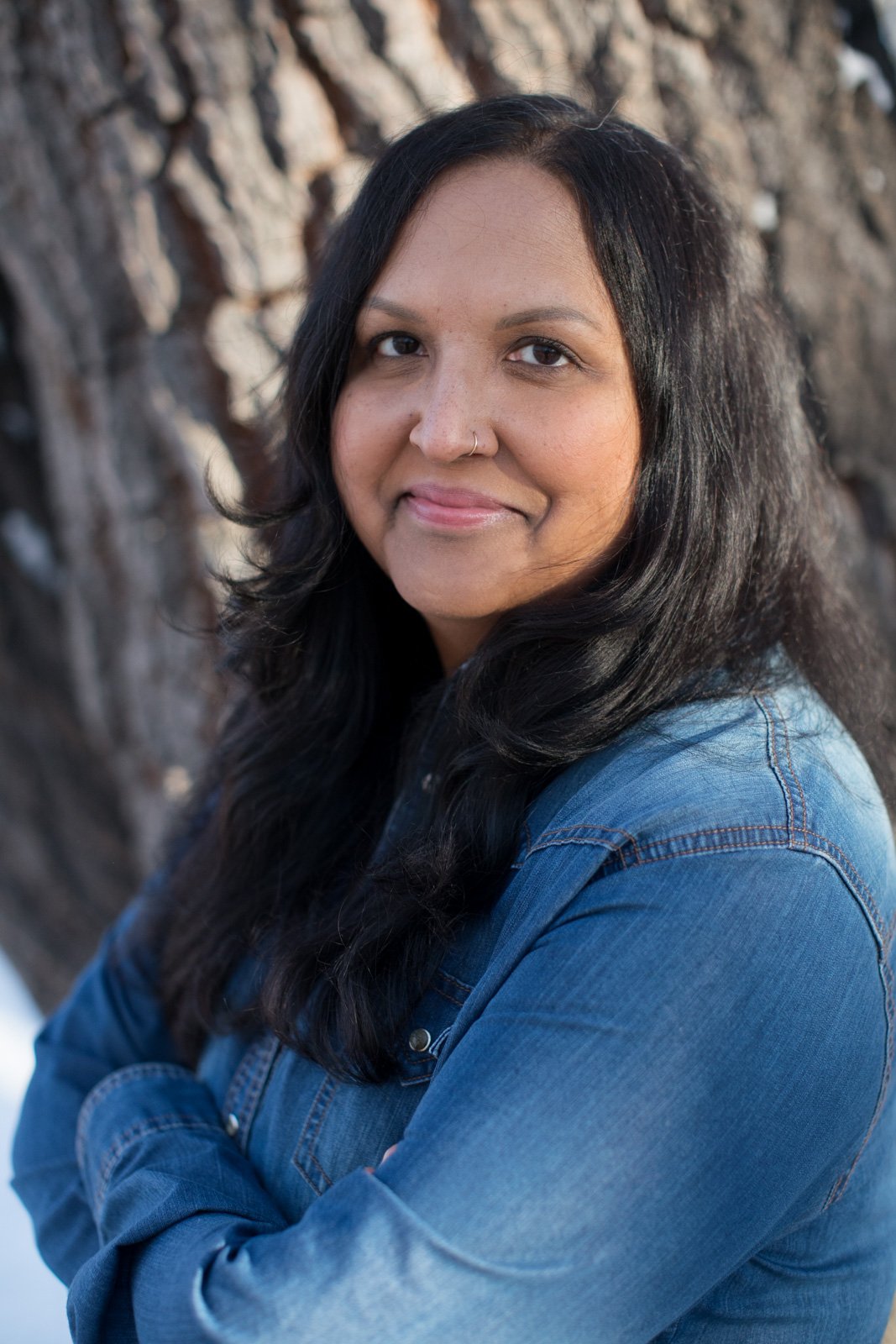
Nina McConigley is the author of Cowboys and East Indians and How to Commit a Postcolonial Murder. Cowboys and East Indians was the winner of the PEN Open Book Award and a High Plains Book Award. Her work has appeared in The New York Times, Orion, O, Oprah Magazine, Ploughshares, Virginia Quarterly Review, American Short Fiction, and Ploughshares, among others. In 2019–2020, she was the Walter Jackson Bate Fellow at the Radcliffe Institute for Advanced Study at Harvard University and is a 2022 recipient of the National Endowment for the Arts (NEA) Creative Writing Fellowship. She teaches at Colorado State University and lives in Colorado.