Mapou
Or, There Once Were Trees
Myriam J. A. Chancy · Haiti
When I was eight years old, I watched the dead receiving final baths on concrete slabs. I peered at them from a gap in a gate that separated the courtyard in front of my grandfather's morgue from his home in Pétion-Ville.
Dunk a cloth so white even the saints can swear on it in clean water, rub with soap, ring out the cloth. Use one hand to handle the body, the other to move the cloth over it in circular motions.
When someone dies, and the people say, “Ah, there goes a gran mapou,” they mean that a lineage, a store of knowledge, is gone.
The mapou refers to a massive tree believed to house spirits, good and bad, depending on the legend. Because of this, they are left to grow, to reign, for hundreds, even over a thousand years.
People say there are hardly any mapou left, as if the island has turned into a desert, winds lifting away auburn dust with every stirring of a harmattan.
I know this can't be true, the way I know the dead I spy are only feigning sleep, waiting patiently for the rituals of their desounen (uprooting) to be performed, so that their gwo bon anj (big soul) can return to Ginen, the land of the ancestors.
Move the cloth in circular motion along the arms, the hands, the torso, the face, the legs, the feet. Get a pail of clear water, another cloth, wipe away the soapy layer until the skin beneath gleams.
The mapou was used to hang enslaved people during colonial times, to mock their gods. The trunks of the trees grew fat and gnarled.
Below a sweltering sun, circle the dead like carrion: Pprepare them for their final resting places.
I peered at them from a gap in a gate that separated the courtyard in front of my grandfather's morgue from his home in Pétion-Ville.
They say there are no more trees in Haiti. Blame the rural poor for cutting down what's left for charcoal.
My grandfather and his mother before him came from the country. They knew country ways like setting barrels up on the roof to collect rain water. They knew the fruit of the land: the kenèp, the mango Francis, pressed the seeds of the passion fruit for morning juice. They made a living in whatever ways were possible: subsistence farming, construction, music, undertaking.
Let the sun dry the body, then turn it over and start again, work your way down from head to toes. The dead have no need for modesty.
In the countryside, there is no harvesting without restoring the ground, turning it over, replanting.
They say the trees are gone but don't name those who cut the most: to fuel sugar hunger, to export mahogany and ebony for the making of sumptuous staircases and furniture no country person has ever seen.
When my grandfather died, he was alone. The man who walked to work every day into his ninth decade until he could walk no more lay in his bed and waited for the desounen to begin. When the angels came, there was no witness to their procession.
When you die, the body makes a little sound, a sigh, as it lets go of its last breath. Only the met têt who receives what's left of the knowledge from the departed mapou can hear it.
They say the trees are gone but they are everywhere you look and cannot see: everywhere a Haitian dies, a seed springs.
About the author
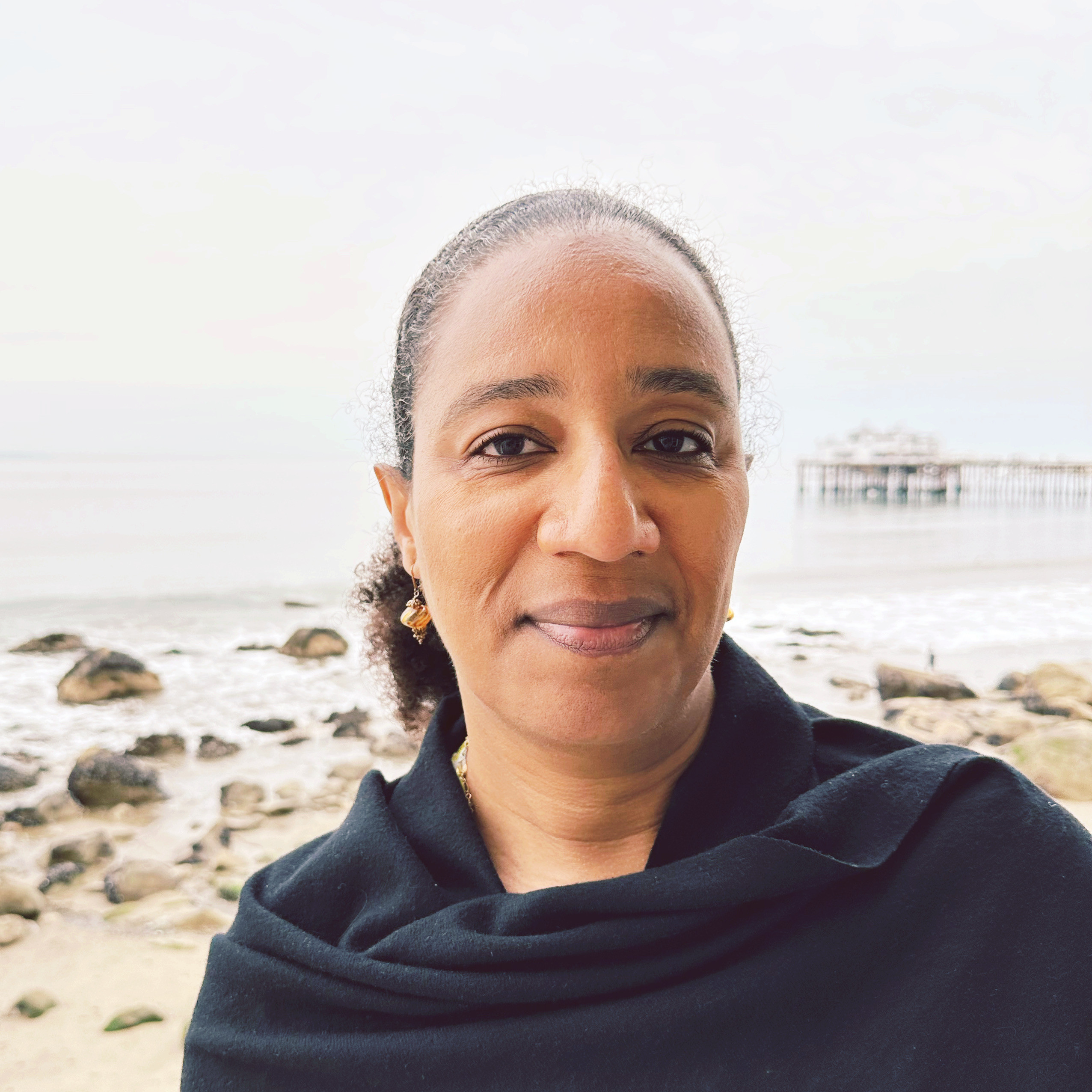
Myriam J. A. Chancy is the author most recently of the novel Village Weavers (Tin House), a Time Best Book of April 2024 and winner of the 2025 Fiction OCM Bocas Award in Caribbean Literature. Her work has received multiple awards, including an American Book Award from the Before Columbus Foundation, the Guyana Prize in Literature, a Foreword INDIES Book of the Year Award Gold Prize, and the Isis Duarte Book Prize. Her previous novel, What Storm, What Thunder, was named a "Best Book of 2021" by NPR, Kirkus, Library Journal, The Boston Globe, The Globe & Mail, shortlisted for the Caliba Golden Poppy Award & Aspen Words Literary Prize, and longlisted for Brooklyn Public Library Book Prize & the OCM Bocas Prize. Her past novels include: The Loneliness of Angels, The Scorpion’s Claw, and Spirit of Haiti. She is also the author of several academic books, including Harvesting Haiti: Reflections on Unnatural Disasters and Framing Silence: Revolutionary Novels by Haitian Women. Recent writings have appeared in Whetstone, Electric Literature, and LitHub. She is a Fellow of the John Simon Guggenheim Memorial Foundation and HBA Chair of the Humanities at Scripps College in California.