Pink Dolphins
Matthew Wong Foreman · Hong Kong
Growing up in Hong Kong, one of my favorite pastimes was going to Tai O village. It was still a community then, before the cafés, the hotels, the barbecue areas, the paved trails sandwiched by iron balusters that now never seem to end. I remember it vividly: sandy beaches the color of mangoes, ripened by sunshine; seawater clearer than an empty sky, as far as the eye could see; the Yeung Hau Temple forever bustling, not only with seniors but children and teenagers, too, clutching stacks of incense to offer the gods they once believed in. After dark, the village stayed alive, and even on weekdays you could hear the clatter of mahjong tiles deep into the next morning.
Back then, sightings were still relatively common, and it would be some years away before Tai O reached its first “must-visit” list.
Located on the furthermost edge of western Lantau, Tai O is a fishing town traditionally associated with the Tanka (“Boat Dwellers”), and one of Hong Kong’s last surviving Indigenous enclaves yet to completely shed its roots. Once dubbed the “Venice of the Orient,” it is most famous for the stilt houses built over tidal flats after the British granted the Tanka land rights in 1898 (they were a marginalized caste for centuries).
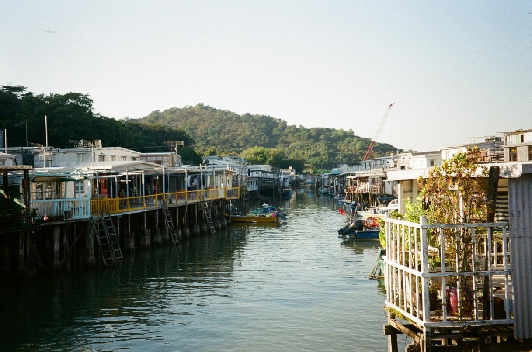
Tai O Village, c. 2006
The water surrounding the village is part of the Zhujiang River Estuary, the natural habitat of pink dolphins, also known as Indo-Pacific humpback dolphins. The first time I witnessed these near-mythical creatures was in 1999, on a school excursion as a first-grader. Back then, sightings were still relatively common, and it would be some years away before Tai O reached its first “must-visit” list. To see one, you simply paid twenty Hong Kong dollars (three USD) to one of the dozens of sampans operating along the canals. Within half an hour, you were out at sea, and you didn’t even have to be that lucky to spot a pod of glistening-white bodies surfing, breaching, porpoising. Sometimes they swam so close you could almost touch them, and I often wondered at what point they realized humans had stopped being their friends.
But that was almost thirty years ago now. Since then, I have experienced first-hand their declining numbers. The new airport in nearby Chek Lap Kok and the Hong Kong–Zhuhai–Macau Bridge polluted the waters and disturbed their sonar, which starved them. Ironically, the mega-boat sighting tours that charge four hundred dollars a head for a chance at a glimpse of these now-rare creatures further impeded their way of life, and by 2009, the WWF reported there were only forty-seven of them left, dropping from 400 a decade earlier.
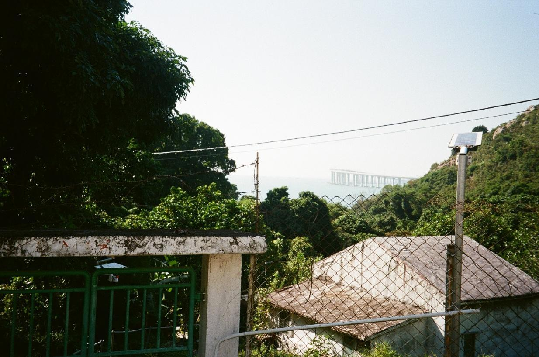
Hong Kong-Zhuhai-Macau Bridge, 2025
As the pink dolphin fades into history, so too does Tai O. The once-lively fishing village occupied by generations of boat people who made the sea their lives now rely on tourism to buy their fish imported from China. The children have long gone now, leaving behind their elders, who refuse to leave for better pastures in the city. And the memory of the dolphin sampans lives on, in a faded, crusty advertisement pamphlet: 中華白海豚 只需$20!
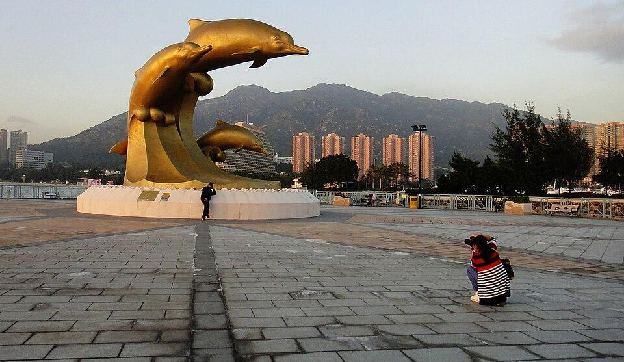
Gold Coast Dolphin Square in Hong Kong
Wikimedia Commons
About the author
Matthew Wong Foreman is a Hong Kong-born writer. He read history and philosophy in Hong Kong and Oxford before completing a PhD at Northwestern University in the United States, where he taught history and writing. His debut novel, Sunset at Lion Rock, was published in 2024 (Proverse, The Chinese University of Hong Kong Press). A North American edition will be released by 7.13 Books in September 2026. His fiction and non-fiction have appeared in publications such as Pacific Historical Review, Asian Ethnicity, Cha: An Asian Literary Journal, and The Oxford Review of Books. His work has been featured by Radio Television Hong Kong and showcased at the Hong Kong International Literary Festival.