Quiet After Snow
Leo Vardiashvili · Gudauri, Georgia
When I was little, Gudauri scared me because I believed the mountains were awake.
Georgia was part of the Soviet Union then, and every winter my uncle drove us north from Tbilisi into the Caucasus. The road climbed through mud, fog, and stone villages until we crossed some unmarked border and the world turned white. The ski village of Gudauri appeared between mountains like a scatter of matchboxes left behind by absent-minded giants.
I hated skiing—the boots were designed to prevent escape, the lifts were designed to produce vertigo, the speed roared danger! in my ear. The mountains tried to kill me more than once.
But what I loved was the silence after it snowed.
It wasn’t an ordinary quiet, nor just the absence of noise. Engines became distant and doors closed softly. Even our voices came back to us hushed in reverence for this fragile, cold miracle. I would stand outside and feel the whole Caucasus listening for something ancient and forgotten under the earth.
Over the years, the mountains stopped trying to kill me. Fear became pleasure and forced family holidays became trips with friends. Then friends dispersed into marriages, jobs, and other countries.
Now I go alone. Gudauri has become the place where I lose myself on purpose.
Up there, life sheds everything unnecessary. There’s only weather, snow, and my heart pounding with the descent. Thought narrows to the width of two skis.
The austere shoulders of the mountains rise one behind another. Sharp ravines fill with long, blue handwriting of shadow on snow. The sight repeats into the distance, as far as the eye can see, and blooms into a huge, still brightness.
The resort remains closed for longer, ugly stones surface through the pristine snow, businesses wait for guests while the guests wait for snow.
Suddenly the world seems small, and my worries feel flimsy and badly made. For a few minutes, I feel like the still, calm centre of my own life, rather than just the frightened passenger.
Lately, though, the mountains have grown forgetful.
Some years, winter loses the thread of the story it’s been telling here for centuries. Some years, it forgets entire mountainsides, leaving dead grass showing through like unhealed skin. Rain falls at times when snow ought to. The season begins later and ends earlier.
Perhaps my childhood falsified the evidence. I remember snow always reaching the windows. But it barely clears the ground now and feels rationed, not to be squandered. Each year, I watch my Gudauri disappearing piecemeal. The resort remains closed for longer, ugly stones surface through the pristine snow, businesses wait for guests while the guests wait for snow.
My nostalgia is the least important part of this. For the locals, a short winter is not an elegy but a calculation. It means empty rooms, idle equipment, wages that don’t arrive, and ends that don’t meet.
I continue to return every year, and I always will. If only to listen for that deep, deep quiet after snow. To stand inside that silence until the whole world shrinks and even memory goes quiet.
I know now that the mountains are awake. Snow is how they speak to us—not by adding anything, but by erasing the unnecessary. The silence afterwards is what they mean to tell us. If only we stopped to listen. But as the world turns increasingly ugly, these mountains grow tired of speaking out against it.
Someday soon, they’ll say nothing at all.
About the author
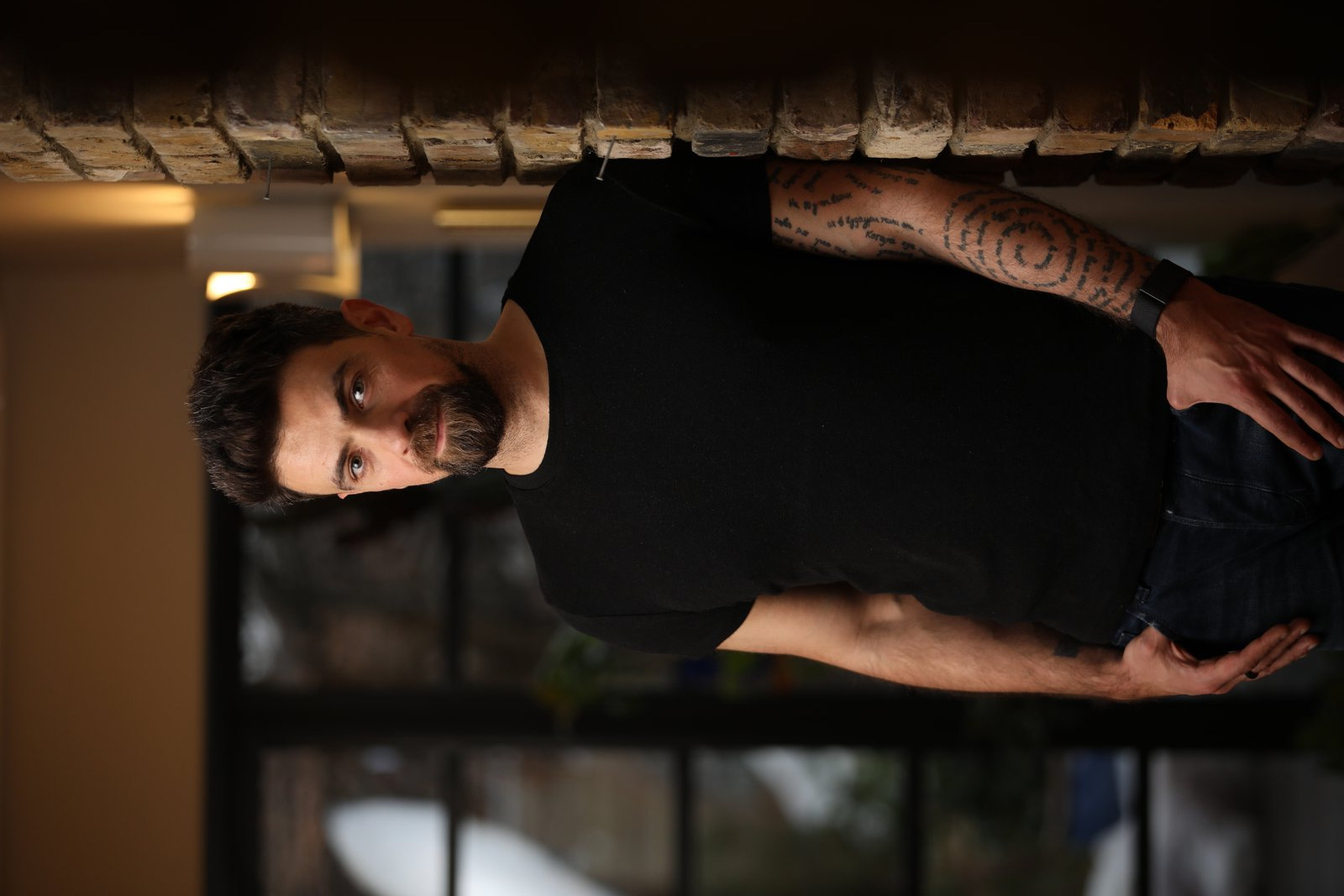
Leo Vardiashvili came to the United Kingdom with his family as a refugee from Georgia when he was thirteen years old. He studied English Literature at Queen Mary College, University of London and now works in the financial sector. He is in his early forties and Hard by a Great Forest is his first novel. It has sold in major deals to Bloomsbury UK and the Riverhead imprint of Penguin Random House in the U.S. Hard by a Great Forest has also sold in Germany, Holland, Italy, Romania, Brazil, Sweden, Hungary, Poland, Lithuania, France, Finland, and Spain.