Wyn-Weeds
Jemma Borg · Leigh, U.K.
A humming inwards, an ‘em’ — think ‘innumerable bees’ — the simmering. Ox-eye and buttercup, a rich glittering —
meadow is a summer word —
and the shadows the wind makes among the grasses in the meadows look like racing clouds:
long grass also nods and rivers
like the surface of water.
*
Every day, on the drive to drop my son at school, I pass an area of grass under a wide oak tree in a village called Leigh that slopes down to the road from the church gate. It fills each May with its exuberance, shifting its smoky self in the wind as the sun catches the grass-heads — white, silver, bruised pink.
Sometimes I just pass by and there’s a moment that plunges its knife into my heart with longing and then is gone again, like a shock along a nerve. Sometimes, as the morning traffic squeezes through the village bottleneck, I can stop long enough for nostalgia to raise a memory. Not one I can place — perhaps it was a dream or is now only a memory of a memory — but it’s so strong, I almost gasp. Summer, early evening, in a meadow, surrounded by pollen and insects. Bare arms and legs, warmth. Childhood.
*
In the past 70 years, the U.K. has lost 97% of its wildflower meadows.1
Global wildlife populations have declined by an average of 73% since 19702 — the year I was born.
A meadow is memory,
a grief place, a loss —
as remembering is a loss
and a re-gathering.
*
I am not speaking of the neatness of lawns. Control is an illusion, as illness teaches us.
Meadows used to be filled with wyn-weeds (in Old English, wyn means joy, weeds means any plant):
meadows are messy
as innocence —
summer wields the seeds,
winter nurtures them
in the flood of its dark.
*
When my husband died from cancer, I was left with our sizeable garden laid largely to lawn to look after. It had previously been my husband’s job. “This is the source of sorrow,” I wrote in my diary, “a lawn.”
My solution was to let much of the lawn turn to meadow. Three years now into this new world created out of untreatable change, and no vibrant patches of wildflowers — not yet — but I have the beauty of long grass, the revelation of all the different types of grass that the homogenous ‘green concrete’ of the mowed lawn had hidden: a mix of heights, sizes of blades, and colour, form, and timing of the seed-heads.
A meadow is a takeover,
soil remembering itself,
a decimated ground
corrected to vigorous life.
*
Grief is a wound in time, like any memory.
Once, I walked in a meadow
in some immense, grandmother-time, summer-haze.
And that world was lost
until this meadow grew
and all the stones of my mind
turned over
to bring me wildflowers —
a child in the tall grass
making a memory —
this memory, here, now.
An mmm going on and on
until it doesn’t.
1The Born Free Foundation
2The World Wildlife Fund
About the author
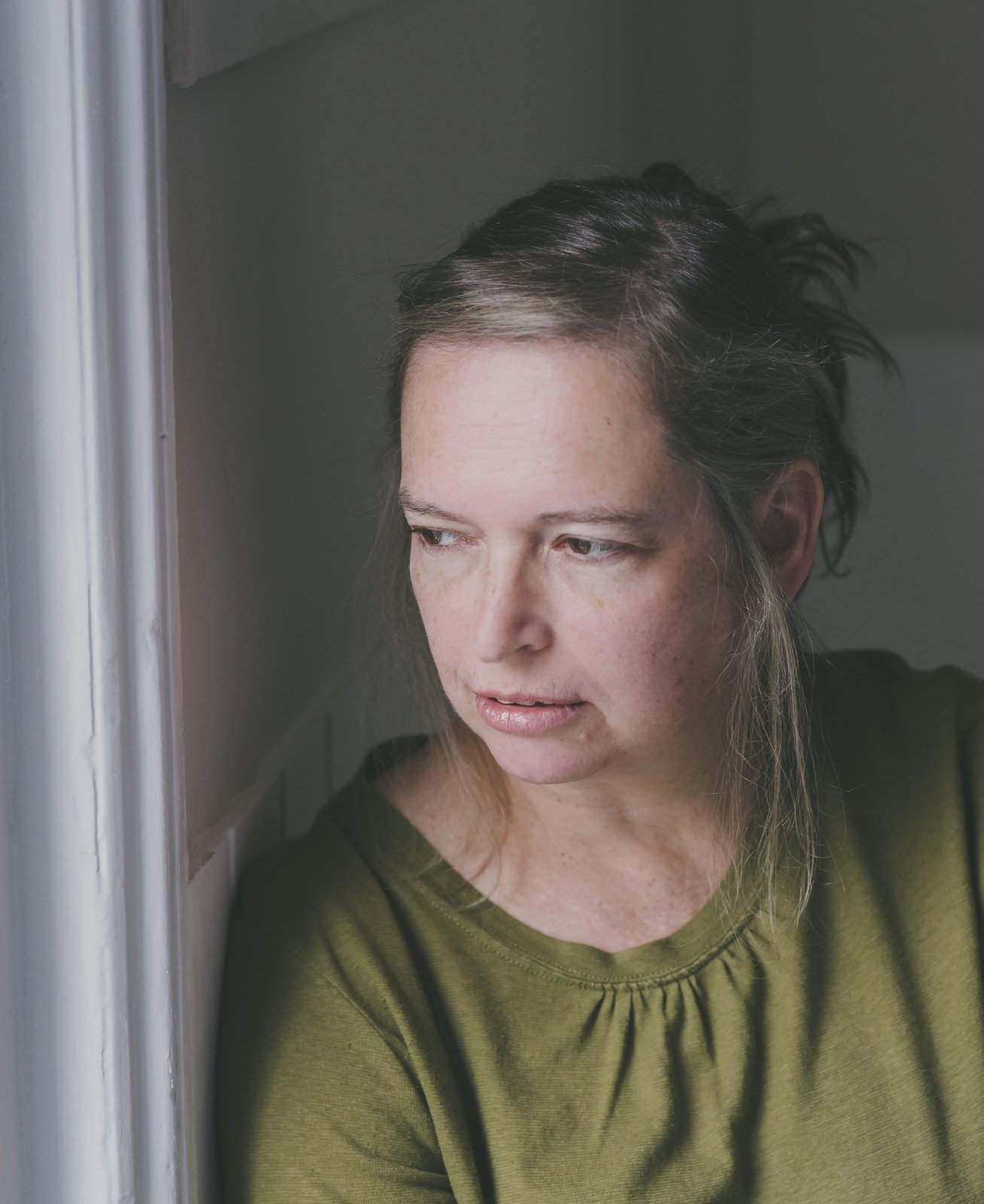
Jemma Borg’s second collection, Wilder (Pavilion, 2022), was shortlisted for the T. S. Eliot Prize and was a winner of the Laurel Prize for ecopoetry. She was also the recipient of the inaugural Ginkgo Poetry Competition. Recent work is published in The Times Literary Supplement, The Poetry Review, and Poetry London. She lives in the High Weald National Landscape in East Sussex in England and was recently commissioned to write a poem about this area.