Beetle
Diana Heald · Massachusetts
Eighteen months after my grandmother’s death, the trees in the forest behind her house on Martha’s Vineyard began to die, too.
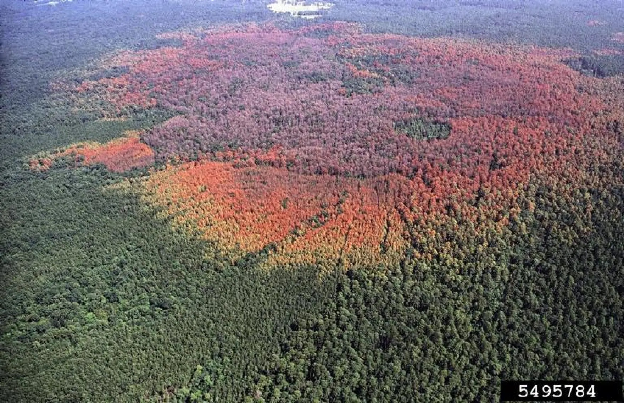
I had long thought of the forest as Winnie the Pooh’s Hundred Acre Wood. The forest spreads, lush and dense, up the hillside away from Vineyard Sound. In high summer, jeweled wineberries ripen in thickets along the dirt road as deer graze in the high grass, the quiet punctured periodically by the distant hum of a biplane or by a woodpecker’s echoing drill. But in the summer of 2023, when I turned down the last bit of dirt road before the sea, I found the forest unrecognizable. The needles of the great pitch pines glowed autumnal orange, but they were evergreens and it was only June. By August, the first sick trees were as brittle and crisp as spent matches. The next year, much of the forest would be dead.
The Southern Pine Beetle had arrived.
A native of the southeast, the Southern Pine Beetle has migrated northward as New England winters warm. No larger than a child’s pinky fingernail, the beetle bores deep holes in the bark of pines. Inside, it lays its eggs, which hatch and spread disease. The sickness grows outward at a rate of up to ten feet per day—“expanding clusters of mortality,“ the Vineyard Gazette calls it. The telltale sign of infestation is a ring of oozing resin around the trunk. By then, it’s too late—cut off from its water supply, the tree will be dead in weeks.
My grief at my grandmother’s death and the uncertain fate of the house she left behind rendered me acutely sensitive to everything else I had lost, was losing, still stood to lose. I found the dying forest painful to look at, so to head off my growing doom, I walked on the beach instead. There, I spotted a black mound—a rock, I thought, until it began to swarm, a mass of black flies feasting on a washed-up seal carcass. I kept wondering what all these deaths meant, what cosmic sign they held for me.
When my parents sell the house, or a storm destroys it, or, failing both, when I die, I will lose my purchase on the Hundred Acre Wood.
The dead turtle pushed me over the edge, a three-foot loggerhead washed up on the shoreline. The woman at Mass Audubon, when my sister called for help, guessed it had drowned, pointlessly, in a fisherman’s net. I was tired of signs; I just wanted the turtle alive. Susan Sontag wrote, “[T]he most truthful way of regarding illness…is one most purified of, most resistant to, metaphorical thinking.” Is this not true of nature, too? To ask nature to mean, to render itself legible, seemed precisely the attitude that had brought us the plague of the pine beetles in the first place: a view of the natural world that placed humans at its center, the sole makers of meaning, destroying more than we create.
This summer, the forest is unrecognizable again. The Southern Pine Beetle has spread northward, ravaging the Maine coast. In its wake, in time, grows new life. In my Hundred Acre Wood, the sun filters in through expanding oak and hickory branches, dappling the forest floor with golden light. The fallen pines rot, their trunks teeming with benign beetles. My grandmother’s great-grandchildren scamper down the dirt paths now, learning them by heart.
It is the nature of all things to change, to die, though the rate at which they do accelerates as winters warm and seas rise. Alongside my horror, I feel a certain schadenfreude in watching the pine blight mar so many moneyed locales—Nantucket, the Hamptons—spoiling their ocean views, forcing the rich to contend with the damage their amassed capital has wrought. Climate change, a viral meme said, shows up on your screens until one day you’re the one holding the camera.
Is the Pine Beetle a rebuke to our carelessness, Mother Nature’s revenge? I want to resist demanding that the Pine Beetle serve as a tidy sign. When my parents sell the house, or a storm destroys it, or, failing both, when I die, I will lose my purchase on the Hundred Acre Wood. I am still working to accept that loss for what it is, letting the forest be legible to itself only, a sovereign and mysterious gift.
Ron Billings, Texas A&M forest service
About the author
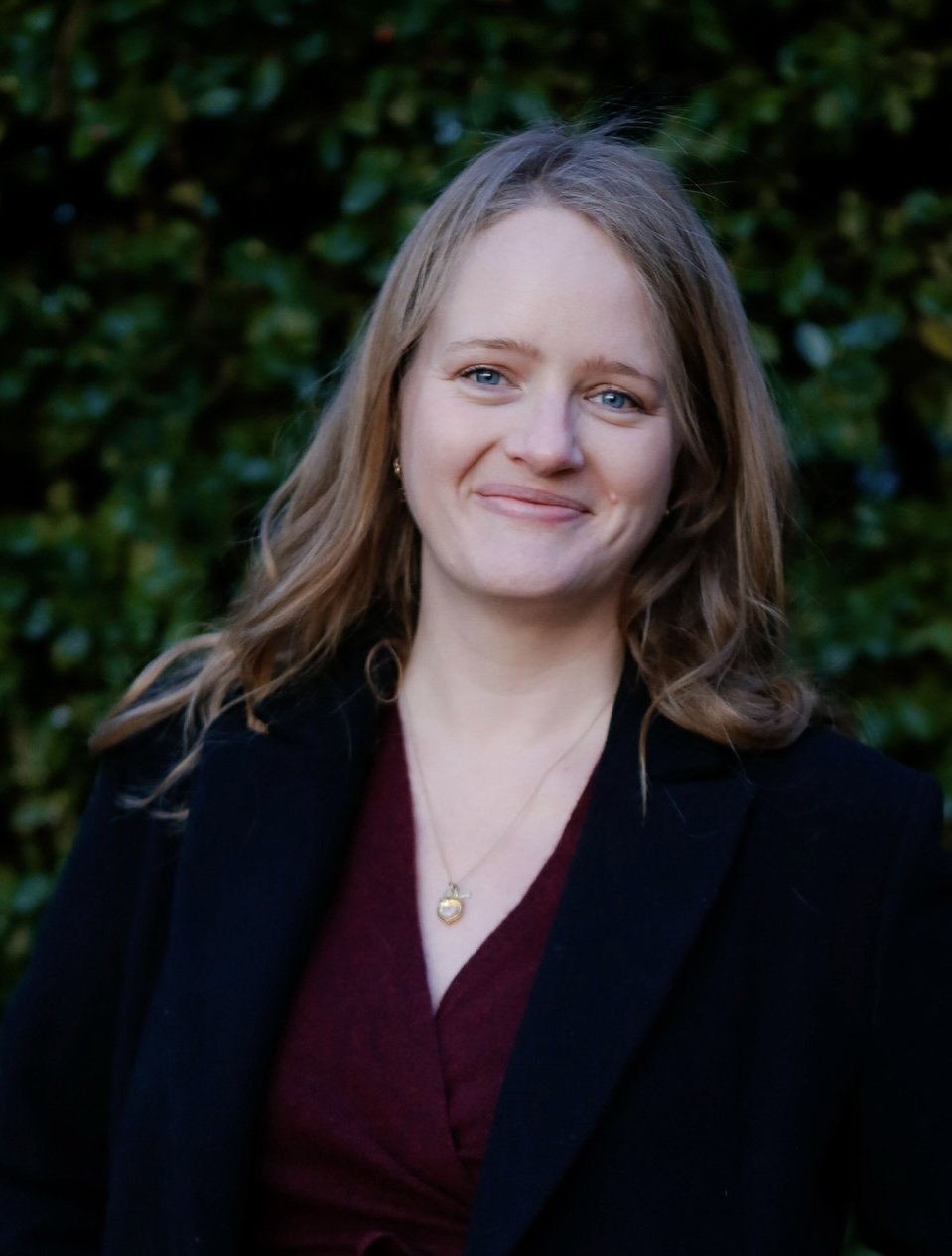
Diana Heald is a Brooklyn-based writer at work on a memoir and cultural history of antidepressants. Her essays and criticism have been featured in the Los Angeles Review of Books, Panorama Journal, Off Assignment, DIAGRAM, and elsewhere. She graduated from Columbia University with an MFA in Nonfiction Writing and from Bowdoin College with degrees in English and Romance Languages. Diana has received fellowships from McCormack Writing Center (formerly Tin House), Lighthouse Writers, Salty Quill, and Columbia University and is a proud member of the National Book Critics Circle. She's also spent the last sixteen years working in advertising as a brand and digital strategist.