Fish Camp
Chantal Rondeau · Yukon
A net weaves and bobs out of the fast-flowing Tagé Cho. Hands hold tight around a rope.
At fish camp, little hands wrap around cold mud, shaping the mud into a pancake. Slapping it on a pretend stovetop that is a flat rock.
Pull, pull, pull. The Yukon River is tough; it fights back. A whoa indicates stop. Stop to remove a stick, to move a little to the left, to remove a salmon.
Hands holding in the gills, sharp teeth pressing into skin. Hands gliding on silky skin, hands covered in slime.
Salmon placed in a big, galvanized steel tub, old, smashed in from years of use. On unsteady rocks, water washes the salmon-sticky hands and the little muddy hands.
Hands guiding a sharp knife into skin, soft eggs spill out in a protective sack.
Salmon slices in glass containers, ready to be canned. Salmon slices with striped cuts placed on branches, over a smokey fire. Salmon fat dripping—our liquid gold.
Salmon heads in a soup. Cheeks, eyeballs and nose all devoured, a special treat for those who were there. Salmon eggs, salty, pop in our mouths. Mud pies dried out by the midnight sun, forgotten on the flat rock stove.
I imagine my daughter’s screech as we drive down a precarious road along the rushing Yukon River. Only a sliver of land protects the car from water.
I imagine salmon wrapped tight in a net, while my little one graduates from muddy hands to learning how to take the fish out of the tangles.
I imagine a July morning, when her little hands are smooshing those same mud pies with her cousins. I imagine a day when the salmon return home to us. I imagine a day when we return home to it.
I imagine that small land surrounding an eddy no longer empty. Empty of nets. Empty of children playing in the mud. Empty of learning and lessons. Empty of a family.
I imagine salmon wrapped tight in a net, while my little one graduates from muddy hands to learning how to take the fish out of the tangles. I imagine her guided by the aunties, learning how to patch the net, fingers tying knots where the salmon break through. I imagine the surprise in her eyes when she holds a king the length of her body, and carries it to the steel bucket. I imagine her, stumbling on those same rocks as she is washing her sticky hands in the cold water.
My daughter’s empty hands. Salmon swimming hard to make it home. A scent is their beacon, and they push through. To hopefully make it to their breeding grounds, the same place they were spawned.
My daughter’s inheritance robbed.
Salmon trying to swerve away, but caught in a commercial fishery’s huge net. The salmon fighting its way, the string grinds into skin.
My daughter’s empty hands. Salmon sensing something is different, wrong, a heat wafting off the Arctic waters.
On the shores of the Tagé Cho, rocky and muddy, a border between the human world and the fish world, there is no longer a fish camp; it is only my imagination. No little muddy hands. No salmon-sticky hands.
About the author
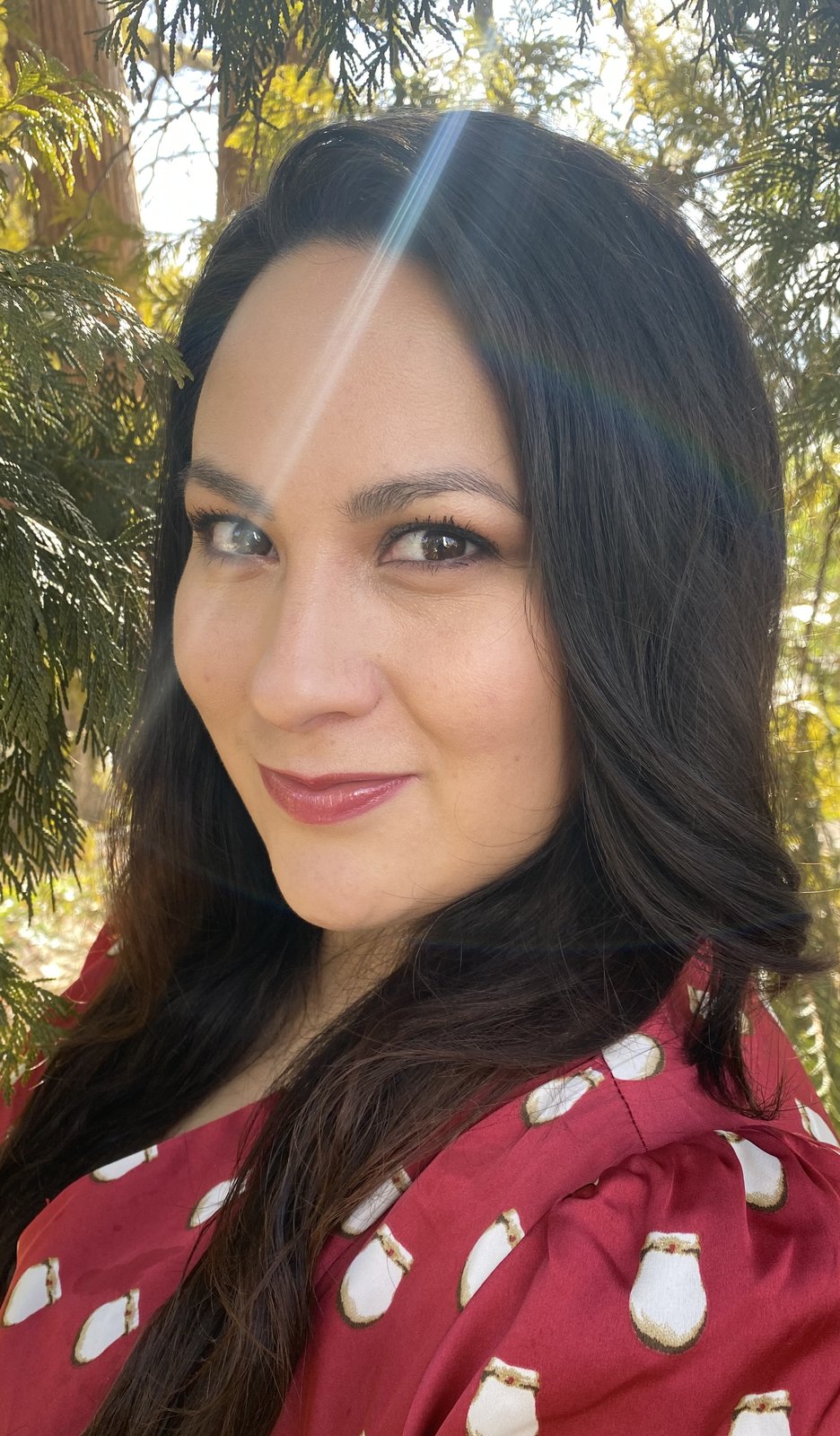
Chantal Rondeau is a Sun Valley Writers' Conference Fellow and the inaugural McCormack Writing Center/Carol Shields Scholar. She holds an MFA from the Institute of American Indian Arts and has received an Indigenous Voices Awards for Unpublished Prose. Chantal hopes to tell stories that shift perceptions and lead to a global understanding of the modern-day Indigenous people. Her debut novel White Ash Falling is forthcoming from Pantheon (USA) and McClelland and Stewart (Canada).